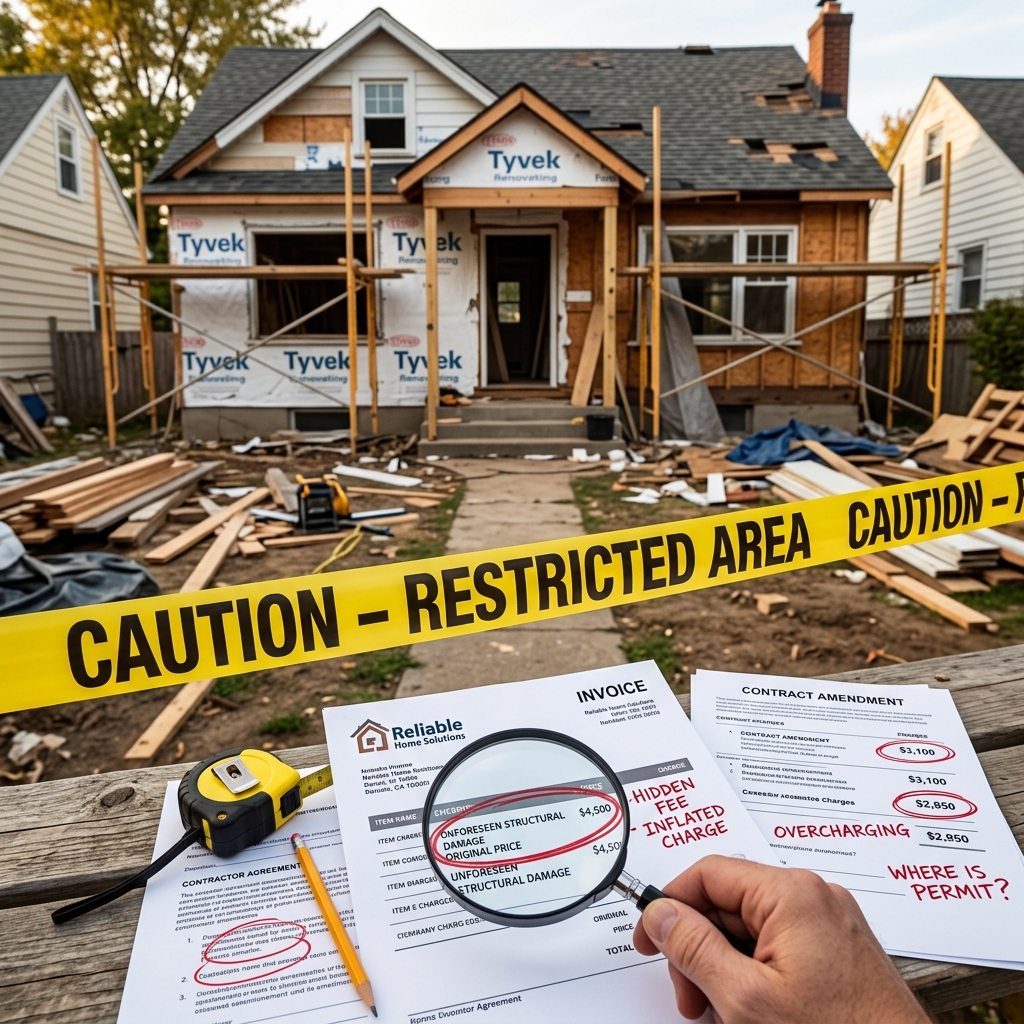
Protection Claims and Fraud
Homeowners are often targeted by fraudulent contractors, especially after natural disasters or during times when home repairs are urgently needed. Understanding the common tactics used by dishonest contractors can help you protect yourself and your finances.
Common Contractor Fraud Tactics
Fraudulent contractors use various methods to take advantage of unsuspecting homeowners:
- Door-to-Door Solicitation: Scam contractors often go door-to-door offering unsolicited repair services at “special prices.” They may claim to have leftover materials from a nearby job.
- High-Pressure Sales: They create a sense of urgency, insisting that repairs must be done immediately or the price will increase dramatically.
- Large Upfront Payments: Fraudulent contractors demand significant deposits or full payment before any work begins, then disappear with the money.
- Insurance Fraud Schemes: Some contractors offer to inflate insurance claims, which is illegal and can result in criminal charges for the homeowner.
How to Protect Yourself
Follow these guidelines to avoid falling victim to contractor fraud:
- Always verify the contractor’s license and insurance before hiring.
- Get multiple written estimates from different contractors.
- Check references and online reviews from previous customers.
- Never pay the full amount upfront — use a payment schedule tied to milestones.
- Get everything in writing, including scope of work, materials, timeline, and total cost.
- Be wary of contractors who only accept cash payments.
What to Do If You Are a Victim
If you believe you have been defrauded by a contractor, report the incident to your local consumer protection agency, the Better Business Bureau, and your state’s attorney general’s office. If insurance fraud was involved, contact your insurance company immediately.
Being vigilant and informed is your best defense against contractor fraud. Take the time to research and verify any contractor before allowing them to work on your home.